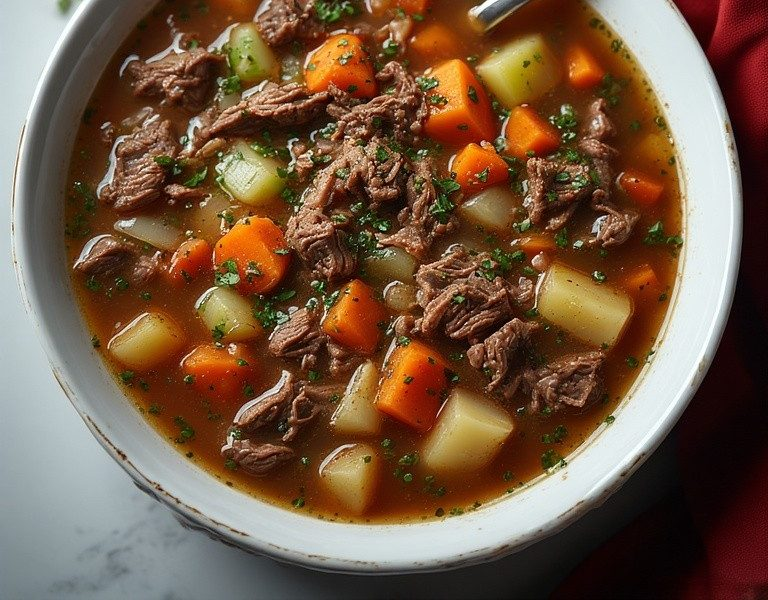
Step 1: The Searing Phase
In a large heavy-bottomed pot, sear your cubed beef in a tablespoon of oil until a dark brown crust forms on all sides. Do not crowd the pan; sear in batches if necessary. This step is vital for the color and depth of the broth.
Step 2: Sautéing the Aromatics
Remove the beef and add diced onions and celery to the rendered fat. Use a wooden spoon to “deglaze” the bottom of the pot, scraping up all the browned beef bits (the fond).
Step 3: The Long Simmer
Return the beef to the pot. Add 8 cups of beef stock, your tomatoes, and herbs. Bring to a boil, then immediately reduce to a very low simmer. Cover and cook for 1.5 to 2 hours until the beef is starting to become tender.
Step 4: Staggering the Vegetables
Add the potatoes and carrots first, as they take the longest to cook. After 20 minutes, add the green beans. This staggering technique ensures that no vegetable becomes mushy.
Step 5: The Final Seasoning
In the last 5 minutes, taste the broth. Add salt and black pepper gradually. A secret tip is to add a teaspoon of Worcestershire sauce or balsamic vinegar at this stage to brighten the overall flavor.
Troubleshooting, Storage, and Serving Suggestions
Headline: Technical Excellence: Protecting Your Soup and Customizing the Pot
Troubleshooting Common Issues
“The beef is still tough”: This means it hasn’t simmered long enough. The collagen hasn’t yet reached the temperature needed to break down. Keep simmering on low.
“The broth is too thin”: You can smash a few of the cooked potato chunks against the side of the pot. The released starch will instantly thicken the liquid.
“The soup is too greasy”: If your beef was very fatty, use a wide spoon to skim the orange oil off the top while the soup is simmering.
Creative Variations
The Barley Twist: Add 1/2 cup of pearl barley during the long simmer for a nuttier, more filling texture.
The Spicy Kick: Add a pinch of red pepper flakes or a diced jalapeño with the onions for a modern, warming heat.
The Wine Factor: Replace one cup of beef stock with a dry red wine (like Cabernet) during the deglazing phase for a gourmet, French-inspired profile.
Storage and Longevity
The Fridge: Like many stews, this soup is often better on the second day. Store in an airtight container for up to 4 days.
Freezing: This soup freezes beautifully. Store in freezer-safe bags for up to 3 months. To serve, thaw overnight in the fridge and reheat slowly on the stovetop.
Conclusion: A Legacy of Flavor
Vegetable Beef Soup is the ultimate proof that simple ingredients, when treated with respect and time, can create a world-class culinary experience. By mastering the sear and the simmer, you are providing your family with more than just nutrition—you are providing a bowl of pure, unadulterated comfort
